In the global landscape of physics education, few resources command as much respect and intrigue as the problem sets from the Russian Physics Olympiad. While many nations produce competitions to identify gifted students, the Russian tradition—spanning from the Soviet era to the present day—has cultivated a distinctive philosophy of problem-solving. Today, the proliferation of these problems in searchable, shareable PDF format has transformed them from a local pedagogical secret into a global training bible for aspiring physicists.
Furthermore, the digital preservation of these problems has democratized access. In the Cold War era, these problems were locked behind iron curtains and expensive, out-of-print textbooks. Today, a high school student in Brazil or Nigeria can download a complete PDF of “Physics Olympiad Problems from the Moscow Institute of Physics and Technology (MIPT)” within seconds. This has arguably raised the baseline of difficulty for international competitions like the IPhO (International Physics Olympiad), as students from non-Russian backgrounds now routinely train on Russian problems. russian physics olympiad problems pdf
To give you a taste, here is a classic problem found in many Russian physics olympiad problems pdf collections: The Forge of Champions: Why Russian Physics Olympiad
records. You are given that the gas follows two known processes: an isobaric expansion and an adiabatic compression. If the maximum temperature in the cycle is cap T sub m a x end-sub and the minimum is cap T sub m i n end-sub , find the maximum possible efficiency of this cycle. 4. Mechanics: Satellite Orbital Speed Pulley systems, connected bodies, collisions in 2D, center
by Gnädig et al., which includes many problems rooted in the Russian/Eastern European tradition. Typical Problem Topics Based on recent final rounds, problems frequently cover:
The Olympiad typically consists of four main stages, increasing in complexity as students progress: Participation Level Local (approx. 200,000 students) Theoretical Local District Theoretical Regional (approx. 6,000 students) Theoretical & Experimental National (approx. 300 students) 5 hours, 5 problems Specialized Training Literature

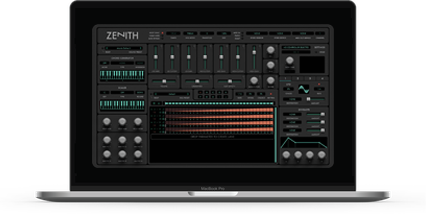
As a feature-rich MIDI processor with a host of filters, chorder, scaler, LFOs, envelopes, and 24 x 32 step sequencers controlling MIDI CCs, pitch, velocity and gate at a variety of rates - with complex tools and presets for modifying lanes. Or as a handy custom interface for simply controlling MIDI and SysEx receiving gear.
Zenith features 200+ presets, with pre-configured maps for over 100 devices and is AU / VST2 compatible for PC/Mac.

AN EXTENSIVE PRESET LIBRARY
200+ presets offering default maps for popular software/hardware including Serum, Massive, Sylenth, Roland Juno 106, MKS-80, Yamaha DX7 and much more.
CUSTOMISABLE CONTROL SURFACE
Easily map knobs, faders, sliders, LFOs, filters, and envelopes to MIDI CC and SysEx functions in any device - realise unparalleled sound generation functionality in MIDI gear and soft synths.
POWERFUL MIDI CC SEQUENCER
Individual sequencers for up to 24 x MIDI CCs, each running at up to 27 unique rates with 100 sequence lane presets and a variety of unique lane modifiers.
CHORDER, SCALER, VELOCITY LIMITER
Smart chord generator with support for up to 792 individual chords, automatic scale generation and note velocity manipulation.
CUSTOM SYSEX SCRIPTING
Easily add obscure SysEx devices and unlock unique functionality in rare, vintage hardware - or simple MIDI learn function for compatible soft synths.
